_edited.png)
Slow & Locally Rooted Tourism in Arunachal's Mishmi Hills


Slow, immersive experiences at the intersection of community, conservation & culture.
ELOPA-ETUGU
COMMUNITY ECO-CULTURAL PRESERVE
We recommend using the mobile site


“My experience in the EECEP (Elopa-Etugu Community Eco-Cultural Preserve) restored my faith in our species (humans).”
— Our guest Dr. Roli Thapar, after spending 7 slow days experiencing Idu Mishmi landscapes, traditions, and community-led conservation practices.


Our Story
"We are four clans of the Idu Mishmi tribe from Elopa and Etugu villages in Arunachal's Lower Dibang Valley. In 2022, through a Gram Sabha resolution, we declared 75 sq KM of our ancestral land as a Community Conserved Area (CCA) named "Elopa-Etugu Community Eco-Cultural Preserve" (EECEP).
When spoken, the abbreviation "EECEP" sounds like a word in our language — ‘ee-see-ee-pee’ which means ‘a place we have left'. This name holds deep meaning for us — we were forced to leave our ancestral land in the 80s-90s when the River Dibang (Talõ) changed course and swallowed our agricultural fields. The following two decades witnessed increased outsider hunting and resource extraction in our ancestral lands."
Wildlife in EECEP
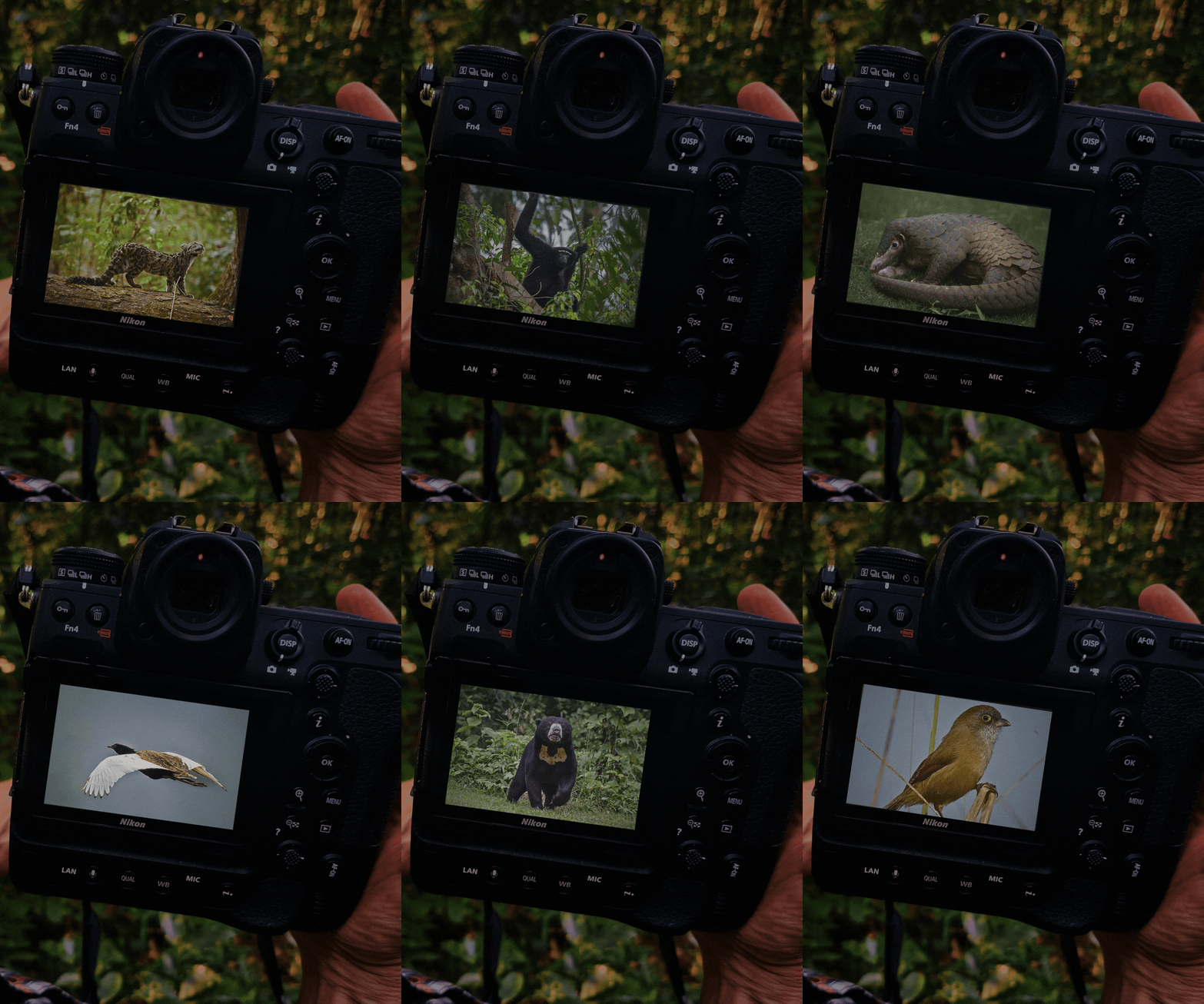
Over 40 species of mammals have been recorded in scientific camera trap surveys led by community members and outside scientists. Compare that with the state protected Mehao Wildlife Sanctuary, which lies right next-door and is 4 times larger than EECEP, where similar camera trapping surveys conducted by the Wildlife Institute of India revealed merely 23 species of mammals. EECEP has flourishing populations of globally endangered species such as Clouded Leopards, Hoolock Gibbons, Chinese Pangolin, Bengal Florican, Dholes, Malayan Sun bears and many other endemic birds, insects, reptiles and amphibians.


ITINERARY

Day 1 : Arrival
3 hours drive from Dibrugarh Airport to reach our riverside cottage in Roing Town. It's been a long day.
Rest the night away for your upcoming adventure.
Ensure your flights land at DIB Airport not later than 3 PM.

In Photo : Nani Heli Elapra
Community Elder and Food Guide
Day 2 : Slow Village Day
Wake up at a leisurely pace to the calls of Hoolock Gibbons.
After breakfast, join the members of EECEP for an orientation followed by a short drive to a village 20 minutes away for a farm-to-table lunch. Spend the day exploring farms, exploring forest patches, meeting community elders, and learning about traditional crafts and weaves.
In the evening, drive for an hour through local farms and forests to reach the entrance of the EECEP and settle around a traditional fireplace in our community rangers’ camp for communal cooking, storytelling, and rice wine.

In Photo : Eja Pulu (Community Mobiliser)
Day 3 : Trek to Elopa Plateau
Wake up early.
After breakfast, take a 30 minutes drive to the starting point of our trek. Set off on a five-hour slow and immersive trek* to the Elopa Plateau (850m).
Throughout the trek, listen to local lore of the land - about mammals, birds, fish, trees, plants, fungi & more through an anthropological Idu Mishmi lens.
In the evening, settle into your tents at Elopa Plateau before we gather by the fire.
*The trek will be moderate-difficult and will be done at a leisurely pace.

Day 4 : Elopa Forest Immersion
A flexible day in a subtropical rainforest shaped by your interests.
With options to hike to the edge of the Elopa Plateau, where you might spot the Himalayan Serow licking natural salt on rocks.
Or join our local research team in setting up scientific camera traps - photographs captured will eventually be mailed to you as a keepsake*.
Or learn the traditional craft of basket-weaving.
Or Learn the traditional Idu methods of trapping and take time to unwind with some forest bathing.
Or go on a night walk to spot bioluminescent fungi (subject to seasonal availability)
In the evening, settle back into camp.
*For Indian Nationals only

In Photo : Eha Tacho (Community Researcher)
Day 5 : Trek to Chembosa Stream Camp
Wake up early. Post breakfast, begin a slow three-hour trek down from the Elopa Plateau to the Chembosa camp next to ecologically rich streams where you can try your hand at traditional fishing*.
Watch the sun dip behind the Mishmi hills followed by an optional night walk before/after dinner.

In Photo : Naba Jibi Pulu (Community Elder)
Sustainable Tourism Practitioner
Day 6 : Talõ & Grasslands
Wake up at a leisurely pace.
Spend the day exploring the EECEP Grasslands which are also home to the critically endangered Bengal Florican. Relax or swim in shallow pools formed by the river*.
In the evening, unwind and barbecue by the Talo river, watching the sun set behind the Mishmi hills before heading back into camp.
*Subject to weather

In Photo : Iho Mitapo (Community Guide)
Sanctuary Wildlife Awardee, Certified Rafting Instructor & Eco-entrepreneur.
Day 7 : DIY Day
Wake up at a leisurely pace and prepare to bid farewell to EECEP
This is a loosely structured, flexible day with options shaped by your interests* -
You could spend more time exploring local villages,
Or embark on a slow river journey out of EECEP on an inflatable raft exploring wildlife and cultures that have made the Talo river their home.
Or drive into Roing Town to visit the Idu Mishmi Cultural Museum, browse local markets, discover small businesses, cafés, and handicraft stores.
Or simply enjoy a balanced mix of these experiences.
In the evening, gather for a final dinner and sharing session with our team at your riverside guesthouse in Roing Town.
*Subject to logistical feasibility.

Day 8 : Departure
Three hours drive across the border through Assamese tea estates, villages and the Brahmaputra river to reach Dibrugrarh Airport.
Ensure to book flights that depart from DIB post 11:30 AM.

Food & Stay

Local Cottage & Tents Hosts: Local Idu Mishmi Families from EECEP Maximum capacity: 4-8 Persons SleepingArrangements: Gendered. Clean & Hygienic. Twin/Triple/Quadruple-Sharing tents with sleeping bags. Toilets: Clean & Hygienic. Shared. Non-attached. Western & Indian. Food: Organic, Home-cooked Idu Mishmi food and local beverages. Vegan, Veg & Non-Veg friendly. Perks: Hot water (Night 1 & 7) & Fireplace.

Upcoming Dates
Wait List | Filling Fast | Slots Available
8 Days & 7 Nights
Group limit:
5-6 carefully selected travellers
MARCH 20-27, 2027
INR 70,000/Person*
+ 5% GST
+ Air/Rail
Flexible Payment Plans Available.
*Wondering what goes into the pricing?
Our FAQ explains the reasoning behind it.
Kindly Note: Pre-scheduled dates listed above are mainly for solo travelers. We may also welcome couples, duos & trios if they fit the group dynamic. These slots are not open to private groups of four or more (including families and children).
Private groups of four or more may opt for a customised journey.
INCLUSIONS
-
All Meals & Accommodation for the scheduled 8D/7N Programme.
-
All transportation (Includes transfer from/to DIB Airport)
-
An experienced team of local researchers, resourceful local guides, cooks & porters (for carrying camping/cooking gear, not for personal luggage). A porter for personal luggage can be arranged at an additional cost of INR1500/Person/Day.
-
Basic Medical/First Aid Kit during the trip.
-
Permits and Permit Fees for Indian Passport Holders Only. Please Note: Foreigners can join the program. However, since Arunachal is close to the China (Tibet) border, a Protected Area Permit (PAP) is required. This must be arranged in the state capital. We can help arrange them at an additional cost (Last we checked, it cost around USD 30-50 per person)
EXCLUSIONS
-
Airfare, Rail fare, Bus fare etc.
-
Any food and beverage costs apart from the ones mentioned in itinerary.
-
Trip extensions, Buffer Days etc.
-
Foreigner Permits and Permit Fees (The permits may cost around USD 50 / Person for foreign passport holders).
-
Any Tips (Our local guides are paid generously. However, we are completely on board if you feel the need to tip them. We do not however encourage paying money to children or buying them chocolates and other packed foods.)
-
Tiffin box, water bottle & spoon for packed lunch. (Kindly bring your own as we want to minimise single-use plastic as much as possible.)
-
Costs arising out of unforeseen circumstances such as bad weather, road blocks, landslides, road conditions, political unrest and any other circumstances beyond our control. Note: The Eastern Himalayas are not known for great roads and there have been instances of road blocks before.
-
Travel Insurance
-
Any personal Expenditure (Shopping, medicines etc)
-
Any items / services not specifically mentioned under the head ‘inclusions’.
Mandatory Check-list
-
Your own toothbrush, toothpaste, shampoo and soap to minimise buying single-use plastic in the valley.
-
Protein Bars (optional)
-
Toilet paper (Non-chemical)
-
Water bottle (Should not be single-use plastic)
-
Sleeping bag (if you already possess one)
-
A fully charged torch or headlamp.
-
2-3 pairs of Comfortable breathable clothes for sunny days: quick dry cotton T-shirts, trousers, pairs of Breathable cotton socks etc.
-
1-2 pairs of Warm Insulating Clothes for winters (temperatures can go as low as 10 degrees during peak winters) - An insulating jacket, Merino wool cap & muffler/bandana, ,Thick Woolen socks and gloves) for cold nights.
-
Odomos spray repellent and/or bug spray against mosquitoes, tics etc.
-
Water resistant trekking trousers are recommended. We do NOT allow denim jeans.
-
A rucksack (with waterproof covering). We do NOT allow suitcases, duffle bags, carry bags or trolley bags as they do not work in mountainous terrains.
-
A small waterproof daypack to carry day essentials like water bottle, jacket, journal etc.
-
Rain jacket + waterproof/resistant trousers or A poncho
-
A sleeping bag liner
-
A bath towel
-
High ankle, good grip trekking shoes (only if you already own a pair)
-
Rubber Boots or Gum Boots in case of rainy forecast (They can be bought locally in Dibang itself for INR500/Pair)
-
Two new or used pairs of comfortable insoles to place inside your gum boots for comfort.
-
A trekking pole (only if you already own one)
-
A hat/cap to protect against the sun.
-
Your medications (allergies/motion sickness/infections or any other personal medications).
-
Appropriate swimming clothes.
-
A pair of slippers.
-
2 big plastic bags - one for storing soiled clothes and the other for any single use plastic generated or found during the program (Single use plastic cannot be disposed in the mountains. Needs to be carried back with you to the plains)
-
A tupperware lunch box and spoon (for packed lunch)
-
Sunscreen
-
A small waterproof daypack for hiking. Daypacks that are not waterproof can be protected by your poncho.
-
Sanitiser spray (to use against leeches)
-
Original ID (Indian Passport or Aadhar or Voter ID) & 4 printed photocopies
-
4 printed photocopies of your Arunachal Permits (We will arrange the permits).
FAQ
How big will the group be?
We host a maximum of 4–6 carefully selected, like-minded participants.
Quality over quantity, always.
Why is this journey more expensive than other tours to Arunachal?
-
This program directly supports the conservation efforts of 84 Idu Mishmi households who have voluntarily given up private ownership of their ancestral lands for collective community stewardship.
-
Operating in remote landscapes comes with significant logistical costs—from off road vehicles and camping infrastructure to support teams that make safe travel through Arunachal's forests possible.
-
Groups are intentionally kept small (4-6 participants) to preserve the quality of the experience, even though this increases the cost per person.
-
We believe in fairly compensating our local researchers, guides, cooks, porters, and support teams, whose knowledge, time, and expertise are central to the journey.
-
Every application is carefully reviewed to ensure a compatible group dynamic. As a result, some applications may not be accepted.
-
Each departure is accompanied by experienced local guides, along with a dedicated trip leader - either an experienced local or an outside facilitator (Shreyas Danappa).
-
Our itineraries remain intentionally flexible, allowing room for context, unexpected encounters, meaningful conversations, and moments of quiet reflection through slow, experiential travel.
-
Rather than maximizing numbers, this journey prioritizes depth, ethics, genuine cultural exchange, and lasting impact.
What fitness level is required?
Treks require reasonable stamina and endurance.
Nothing technical but you should be comfortable being active outdoors.
Can you help me extend my journey beyond the itinerary?
Yes.
We have a growing local network and are happy to help you plan onward travel and connect you with the right people.
What should I bring?
We’ve shared a detailed packing list help you prepare for the journey.
Is it safe — especially for women?
Yes.
All locations are personally vetted for safety, our local team is sensitised to women’s safety and guests are filtered to ensure women can travel comfortably within these groups.
In fact, around 90% of our guests are women.